


 Admin
Admin 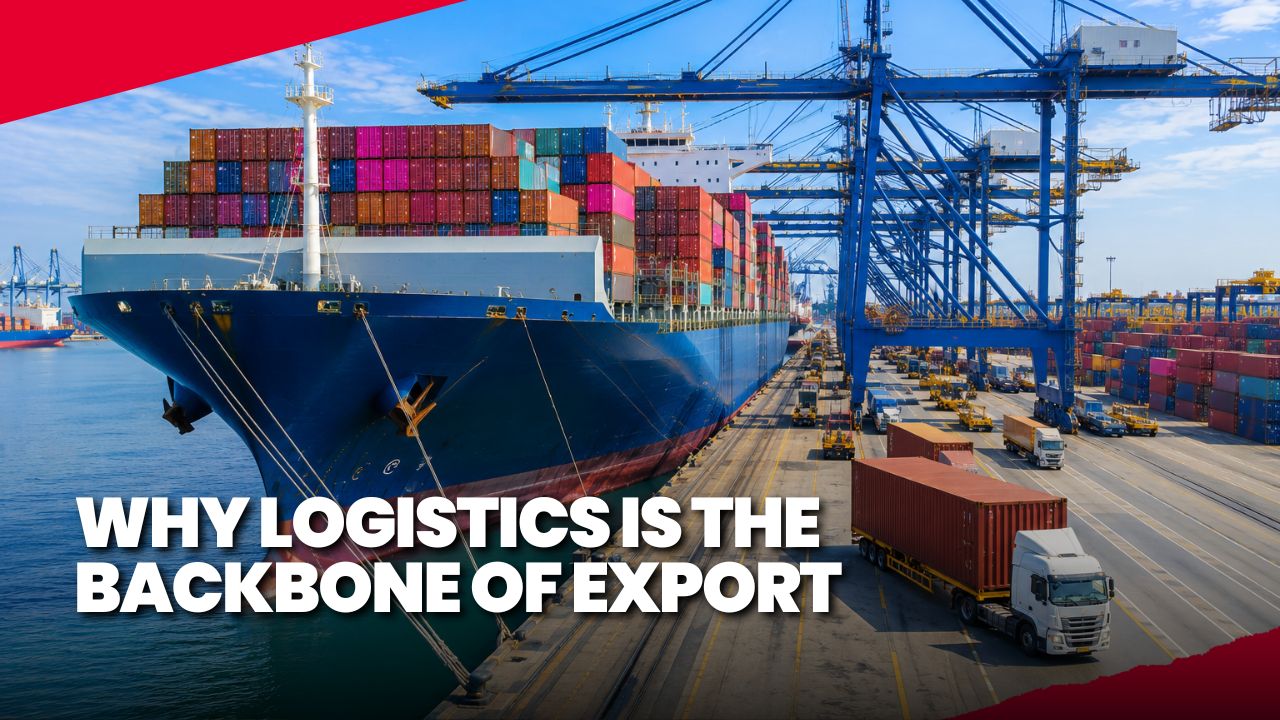
In today’s global economy, products are no longer limited to local markets. A small manufacturer in India can now sell goods to customers in the United States, Europe, the Middle East, and Southeast Asia. But behind every successful international shipment, export logistics serves as the backbone of global trade.
In the modern import-export industry, logistics is not just about transportation. It also includes warehousing, inventory management, packaging, documentation, and on-time delivery. Today, businesses compete not only on product quality and price but also on fast and reliable shipping. Efficient logistics helps exporters reduce costs, avoid delays, and maintain strong relationships with international buyers.
The growing demand for global trade has also increased the importance of studying logistics, as companies need skilled professionals who understand supply chains, shipping operations, and international trade management. Simply put, without logistics, global trade would struggle to function smoothly.
Understanding Export Logistics
Export logistics refers to the entire process of moving goods from one country to another in an organized and efficient manner. It includes transportation, warehousing, packaging, inventory management, customs documentation, and final delivery to international buyers.
The process may seem simple from the outside, but it involves multiple stages and coordination between various parties such as exporters, freight forwarders, shipping companies, customs authorities, and transportation providers.
A successful exporter relies on several important factors:
- Proper packaging and labeling
- On-time transportation
- Proper export documentation
- Simplified customs procedures
- Secure handling of goods
- Efficient delivery management
Even a small mistake in logistics can cause big problems for exporters. Delayed shipments, damaged goods, incorrect paperwork, or customs issues can lead to financial losses and unhappy customers.
This is why businesses invest heavily in professional logistics systems to handle international shipments smoothly.
Why Logistics Is Essential For Export Growth
Ensures on-time delivery In international trade, time is of the essence. When buyers dealing with large retail chains, manufacturers, or distributors, they expect products to arrive on time
Efficient logistics ensures that products move smoothly from factories to ports and ultimately to the customer’s destination. Delays in transportation can affect the entire supply chain and damage business relationships.
For example, if an exporter ships textile products late during the festive season, the buyer may lose sales opportunities. Similarly, delayed industrial components can shut down production lines in factories.
Strong logistics planning helps exporters maintain delivery commitments and build long-term trust with global customers.
Role Of Supply Chain Management In Export
One of the most important parts of international trade is Supply Chain Management. It refers to the coordination of suppliers, manufacturers, warehouses, transport systems, and distributors involved in delivering products to customers.
In export businesses, supply chains are often more complex because goods move across multiple cities, ports, and countries.
Efficient supply chain systems help businesses:
- Reduce transportation costs
- Improve inventory control
- Avoid unnecessary delays
- Increase operational efficiency
- Enhance customer satisfaction
Modern exporters use technology-driven supply chain systems to track shipments in real time, manage warehouse operations, and forecast demand accurately.
When supply chain operations are properly managed, exporters can handle larger international orders with greater confidence and efficiency.
Importance Of Export Shipping
Export shipping is one of the key components of international trade. It involves the transportation of goods to foreign markets by sea, air, rail or road.
Different products require different shipping methods.
For example:
- Perishable goods often use air freight for faster delivery
- Heavy industrial products usually use ocean freight
- High-value items may require specialized transportation systems
- Choosing the right shipping method has a direct impact on delivery speed, transportation costs and product safety.
Ocean shipping is one of the most popular methods for international trade because it allows businesses to transport large quantities at a relatively low cost. Ports, shipping lines and cargo terminals form the foundation of the global export infrastructure.
Without efficient export shipping systems, managing international trade volumes becomes extremely difficult.
How Container Shipping Changed Global Trade
The global logistics industry was completely transformed with the introduction of container shipping.
Before containers became commonplace, loading and unloading cargo was slow and expensive. Goods had to be handled individually, which increased the risk of theft, damage, and delays.
Containers make it easier to move goods between trucks, trains, and ships without having to unload cargo repeatedly.
Benefits of container shipping include:
- Faster cargo handling
- Reduced product damage
- Lower transportation costs
- Improved shipment security
- Better inventory management
Containerization has made global trade faster, more organized, and more cost-effective for exporters around the world.
Role Of Freight Forwarding Services
Managing international shipments can be very complicated for new exporters. This is where professional freight forwarding services become extremely important.
Freight forwarders act as logistics coordinators who help exporters manage transportation, documentation, customs procedures, warehousing, and cargo movements.
Their responsibilities often include:
- Booking cargo space
- Preparing shipping documents
- Coordinating with shipping companies
- Managing customs procedures
- Tracking shipments
- Managing cargo insurance
Experienced freight forwarders help businesses avoid costly mistakes and improve shipping efficiency.
For small and medium-sized exporters, freight forwarders provide access to global logistics expertise without the need to build an in-house logistics department.
The Importance Of The Customs Clearance Process
Customs Clearance Process is the One of the most critical stages of international trade.
Every country has its own import and export regulations, taxes, duties, and documentation requirements. Goods cannot legally enter or leave a country without customs approval.
The customs clearance process involves:
- Filing export declarations
- Verifying shipment documents
- Paying duties and taxes
- Inspecting cargo when necessary
- Receiving shipment clearance
Incorrect paperwork or missing documents can lead to shipment delays, penalties, or cargo confiscation.
Many exporters rely on customs brokers and logistics experts to ensure compliance with international trade regulations. Efficient customs handling is essential for smooth export operations.
Import Export Logistics And Global Trade Connectivity
Countries trade products because no nation can produce everything efficiently on its own. Some countries specialize in manufacturing, while others focus on raw materials, technology, agriculture, or consumer goods.
Import-export creates logistics networks that allow these goods to move around the world.
From Indian pharmaceuticals reaching Europe to electronics coming from East Asia, logistics systems connect manufacturers and consumers globally.
Efficient logistics contributes to:
- Higher export competitiveness
- Faster economic growth
- Better international trade relations
- Increased employment opportunities
- Lower production costs for consumers
Countries with strong logistics infrastructure often become global trade hubs because businesses choose reliable transportation networks
Technology Is Transforming Export Logistics
Technology is rapidly transforming the logistics industry.
Modern logistics companies now use advanced tools such as:
- GPS shipment tracking
- Artificial intelligence
- Warehouse automation
- Blockchain documentation
- Data analytics
- Cloud-based logistics platforms
This technology helps exporters improve visibility, reduce errors, and optimize transportation routes.
Real-time tracking systems allow businesses to monitor shipments at every stage. Automated inventory systems reduce warehouse errors. Digital documentation speeds up customs processes.
Technology-based logistics solutions are helping exporters become more efficient and globally competitive.
Challenges Faced In Export Logistics
Despite advancements, exporters still face several logistics challenges.
Rising Transportation Costs
Fuel prices, shipping rates, and container shortages can increase logistics expenses significantly.
Port Congestion
Busy ports often experience delays due to high cargo volumes, labor shortages, or operational inefficiencies.
Regulatory Changes
Different countries frequently update trade regulations, creating compliance challenges for exporters.
Supply Chain Disruptions
Natural disasters, geopolitical conflicts, pandemics, and global economic issues can impact supply chain operations.
Documentation Errors
Even minor mistakes in export paperwork can delay shipments and increase costs.
To overcome these challenges, exporters need strong logistics planning, experienced partners, and efficient risk management strategies.
Why Efficient Logistics Creates Competitive Advantage
Efficient logistics can be a key competitive advantage in global markets.
International buyers prefer suppliers who can:
- Deliver consistent products
- Maintain shipment transparency
- Reduce delivery delays
- Handle large orders efficiently
- Offer competitive shipping costs
Companies with strong logistics systems often build better customer relationships and expand quickly into international markets.
Many successful exporters understand that logistics is not just a support function – it is a business growth strategy.
Conclusion
Logistics is more than transportation – it is the backbone of global trade. From export shipping and supply chain management to customs clearance and freight forwarding services, every step plays a key role in successful exports.
Efficient export logistics helps businesses reduce costs, improve delivery speed, and build strong global partnerships. As international trade grows, a strong logistics system remains essential for global business expansion.
FAQ
Businesses can lower costs through route optimization, better packaging, and efficient freight planning.
Exporters use freight forwarders to simplify shipping, documentation, customs, and cargo handling.
Major challenges include shipping delays, rising freight costs, customs issues, and supply chain disruptions.