


 Admin
Admin 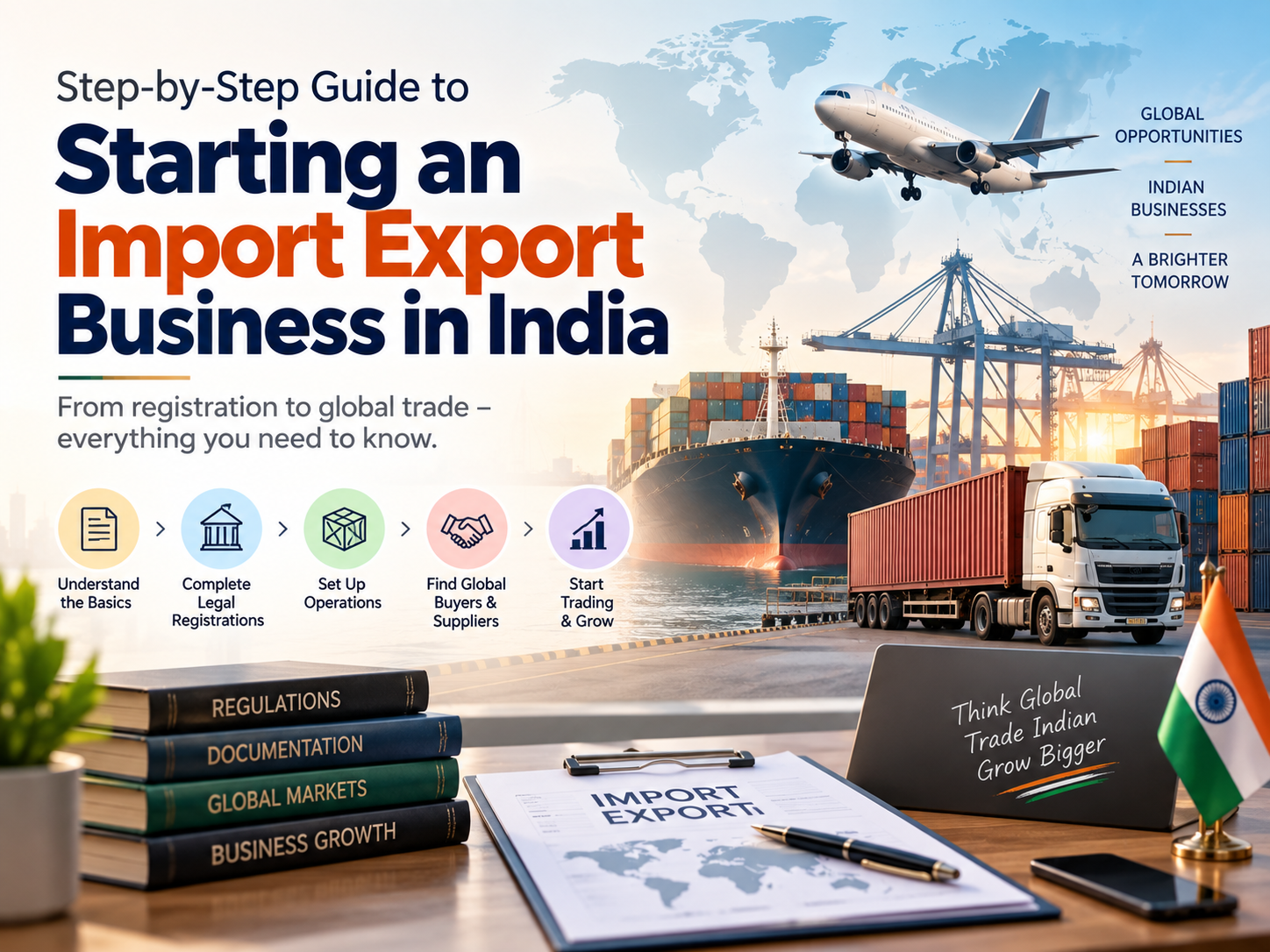
Starting an import export business in India is one of the most rewarding career paths for entrepreneurs looking to tap into global trade. With India’s growing economy, government incentives for exporters, and rising international demand for Indian goods, the opportunities have never been better. But like any business, success depends on understanding the right process, documentation, and strategy from day one.
Step 1: Understand the Basics of Import Export Trade
Before diving in, it is important to understand how international trade works — how goods move across borders, how payments are settled, and how customs regulations apply. Enrolling in a structured import export course can help beginners build this foundational knowledge quickly instead of learning through costly trial and error.
Step 2: Choose Your Product and Target Market
Successful import export businesses start with the right product-market fit. Research demand trends, competitor pricing, and quality standards in your target country. Consider factors such as:
- Product demand in international markets
- Competition and pricing benchmarks
- Shipping feasibility and packaging requirements
- Import regulations of the destination country
Step 3: Register Your Business
To legally operate an import export business in India, you need to complete a few essential registrations:
- Business registration — as a sole proprietorship, partnership, or private limited company
- PAN card for the business entity
- GST registration for tax compliance
- Import Export Code (IEC) — issued by the DGFT, mandatory for all import/export transactions
Without a valid IEC, you cannot legally import or export goods from India, so this step is non-negotiable.
Step 4: Get RCMC Registration
The Registration Cum Membership Certificate (RCMC) is required to avail benefits under India’s Foreign Trade Policy, including duty exemptions and export incentives. Learn more about the RCMC registration process to ensure your business qualifies for these benefits.
Step 5: Understand Costing and Pricing
Accurate cost calculation is critical to staying profitable in import export trade. This includes product cost, freight, insurance, customs duty, and margins. Using a proper costing and price calculation method helps avoid underpricing or losses on international orders.
Step 6: Find Buyers and Suppliers
Building a reliable network of buyers and suppliers is essential. This can be done through:
- B2B trade portals and marketplaces
- Trade fairs and exhibitions
- Export promotion councils
- Direct outreach and networking
Reviewing a good B2B and B2C buyer list can significantly speed up the process of finding genuine international buyers.
Step 7: Handle Documentation and Customs Clearance
Every shipment requires accurate documentation — commercial invoice, packing list, bill of lading, and certificate of origin, among others. Understanding the customs clearance process in detail helps avoid delays and penalties at ports.
Step 8: Arrange Logistics and Shipping
Choose reliable freight forwarders and shipping partners based on cost, transit time, and reliability. Decide between air and sea freight depending on the product type, urgency, and budget.
Why Formal Training Helps
While it is possible to learn import export business through experience, formal training significantly reduces costly mistakes. A structured course covers documentation, compliance, costing, and market research in a practical, guided format — helping new entrepreneurs launch with confidence rather than guesswork.
Conclusion
Starting an import export business in India requires the right combination of registration, documentation, market research, and logistics planning. By following a structured, step-by-step approach — and investing in proper training where needed — entrepreneurs can build a compliant, profitable international trade business.