


 Admin
Admin 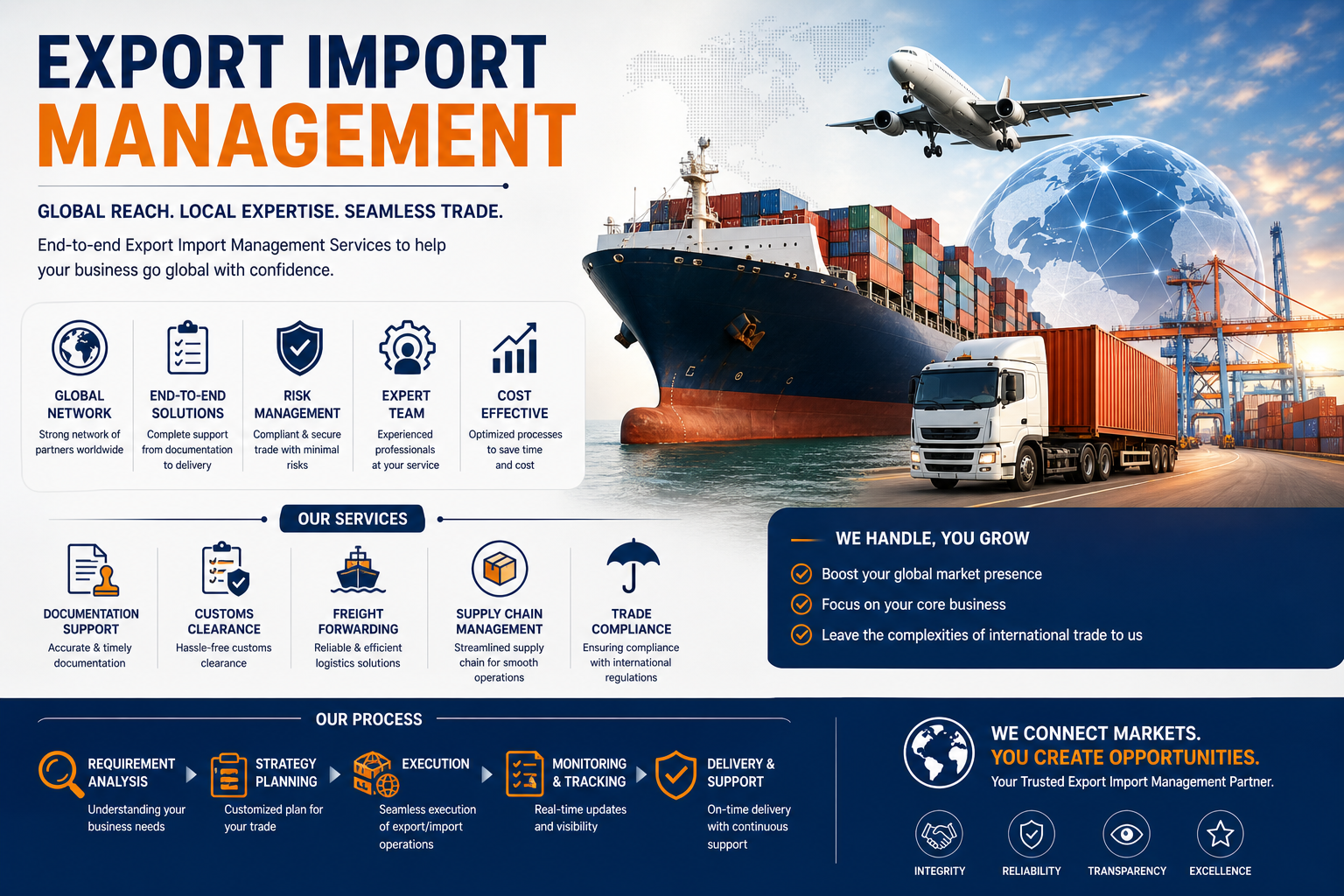
Introduction to Export Import Management
Understanding Export Import Management
Export import management is essential for any business involved in international trade. It deals with the planning, coordination, and control of the flow of goods and services across borders. Companies rely on effective export import management to ensure smooth and compliant transactions. This process covers everything from market research to shipping and documentation. It also includes managing regulations, tariffs, and exchange rates.
Companies must follow specific procedures to avoid delays and penalties. Export import management helps businesses navigate complex customs requirements. It prepares them to handle global competition. A well-structured export import management strategy boosts efficiency and profitability.
Key Components of Export Import Management
Export import management consists of several core components. These are market analysis, documentation, logistics, risk management, and compliance. Each component plays a vital role in the export import process. For example, market analysis helps businesses identify potential markets and customers overseas. Documentation involves preparing invoices, certificates of origin, and shipping documents.
Logistics focuses on the transportation and handling of goods. Risk management addresses currency risks, political risks, and credit risks. Compliance ensures that the business follows international trade laws and regulations. All these components work together to support successful export import operations.
Here is a table summarizing the main components:
| Component | Description |
|---|---|
| Market Analysis | Study foreign markets and identify opportunities |
| Documentation | Handle essential export import paperwork |
| Logistics | Manage transport and storage of goods |
| Risk Management | Address risks in international trade |
| Compliance | Meet trade laws and regulations |
Importance of Export Import Management
Export import management supports business growth by opening access to global markets. It helps businesses expand beyond local boundaries and reach new customers. This process also strengthens a company’s competitive edge in the marketplace. Effective export import management reduces costs and minimizes delays. It ensures that companies meet all legal and regulatory requirements.
Companies that focus on export import management can build strong trade relationships. They can also respond quickly to changes in international demand. A reliable export import system increases trust with buyers and suppliers. It helps companies adapt to the dynamic nature of global trade.
The Export Process
Understanding Export Procedures
Export import management begins with a clear understanding of export procedures. Businesses must identify the target market and product to export. They research regulations, required certifications, and documentation for the destination country. Market research helps in setting pricing and negotiating terms with potential buyers. Proper paperwork, including invoices and export licenses, ensures compliance with laws.
Firms also need to register with export promotion councils or government agencies. This registration often provides access to various incentives and guidance. Exporters must keep up with changes in trade policies and international agreements. These steps lay the foundation for a smooth export process.
Documentation and Logistics
Documentation forms the backbone of export import management. Key documents include commercial invoices, packing lists, bills of lading, and certificates of origin. Accurate and timely documentation helps avoid customs delays. It is important to prepare documents according to the importing country’s requirements.
Once the paperwork is ready, logistics planning takes center stage. Exporters decide on transportation modes: air, sea, rail, or road. Choosing the right transport depends on cost, delivery times, and product type. Coordination with freight forwarders and customs brokers ensures all procedures are followed.
| Key Export Documents | Purpose |
|---|---|
| Commercial Invoice | Details sale transaction |
| Bill of Lading | Confirms shipment and ownership |
| Certificate of Origin | Shows product origin |
| Packing List | Lists items in each shipment |
Shipping and Post-Shipment Activities
After documentation and logistics, shipping completes the export process. Goods are loaded and dispatched as per the buyer’s instructions. Exporters track shipments to address delays or issues promptly. Insurance coverage protects goods during transit and minimizes financial losses.
Post-shipment, businesses focus on payment collection and compliance checks. They monitor payments through banking channels and ensure receipts are recorded. Exporters also handle any customer feedback or claims related to the shipment. Regular review of each export cycle supports ongoing improvement in export import management.
The Import Process
Understanding Import Procedures
Importing goods involves several steps, each governed by regulations. The process starts with identifying the right supplier and negotiating contract terms. The importer must verify the supplier’s credibility and assess product compliance with local standards. Before placing an order, it is crucial to ensure that all certifications and permits required for import are in place. Missing documentation can cause delays or result in penalties from customs authorities.
Once the agreement is finalized, the importer must file an import declaration. This document details the nature of goods and their value. It is required by customs for proper assessment of duties and taxes. All invoices, packing lists, and certificates of origin must be attached. Correct paperwork supports a smooth customs clearance process.
Customs Clearance and Documentation
Customs clearance is a central part of export import management. The importer submits documents such as the bill of lading, import license, and insurance certificate. These documents are reviewed by customs officers. Any inconsistency or missing paperwork may result in the consignment being held at the port.
A typical set of documents required for imports includes:
| Document | Purpose |
|---|---|
| Bill of Lading | Proof of shipment details |
| Commercial Invoice | Shows value and terms of sale |
| Packing List | Describes contents of shipment |
| Certificate of Origin | Shows where goods were manufactured |
| Import License | Authorizes legal import of goods |
| Insurance Certificate | Confirms protection of goods in transit |
Customs then assesses the goods and determines the applicable tariff. Importers must pay any duties and taxes before the goods are released. Timely submission of documents helps to prevent unnecessary storage charges at the port.
Post-Clearance and Delivery
The final stage in the import process is arranging for transportation from the port to the warehouse or distribution center. Importers often work with freight forwarders or logistics companies to manage this. They coordinate the movement of goods, handle unloading, and ensure compliance with local transportation laws.
After delivery, importers check the products for quality and quantity. Any issues found are reported to the supplier, and claims are filed if necessary. Keeping detailed records of every step is vital for audit purposes and future reference in export import management.
Best Practices in Export Import Management
Ensuring Regulatory Compliance and Documentation
Effective export import management begins with understanding and meeting all regulatory requirements. Companies must keep up-to-date with changing international trade laws and local regulations. Accurate documentation is essential, including invoices, packing lists, certificates of origin, and bills of lading. Errors in paperwork can cause shipment delays or penalties.
Maintaining a checklist for required documents streamlines the process. Digital record-keeping tools help manage large volumes of documents efficiently. Regular training for staff on export import regulations reduces the risk of compliance errors. Proper classification of goods using Harmonized System (HS) codes ensures smooth customs clearance.
Building Reliable Supply Chain and Logistics
Selecting trustworthy logistics partners is critical for timely and safe delivery. Companies must compare shipping routes, carriers, and freight forwarders to optimize cost and performance. A good relationship with suppliers and buyers helps manage unexpected disruptions. Clear communication channels prevent misunderstandings during transport.
Inventory management tools support efficient handling of goods in warehouses and transit. Insurance for goods in transit protects against potential losses or damages. Monitoring shipment status using tracking technologies enables proactive response to issues like delays or route changes.
| Key Supply Chain Areas | Best Practice |
|---|---|
| Carrier Selection | Compare rates and reliability |
| Inventory Management | Use automation tools |
| Shipment Tracking | Leverage real-time systems |
Managing Risks and Financial Transactions
Risks in export import management include currency fluctuations, political instability, and payment defaults. Using hedging strategies manages exchange rate risks. Diversification of markets and suppliers reduces reliance on single sources. Conducting due diligence on international partners limits exposure to fraud.
Secure payment methods, such as letters of credit or escrow services, safeguard financial transactions. Clear contracts outline responsibilities and help resolve disputes efficiently. Regular risk assessment identifies new threats and supports continuous improvement of processes in export import management.
Conclusion and Future Trends
Key Takeaways from Export Import Management
Export import management remains vital for global business. It ensures smooth movement of goods across borders. Companies that master export import management reduce risks and improve profits. Understanding regulations is necessary. Documentation and compliance shape the success of export and import operations. Businesses depend on efficient supply chains and proper planning in this field.
Market research and logistics play a major role. They help businesses find opportunities and avoid pitfalls. The use of proper tools and skilled people boosts efficiency. Export import management also requires awareness of currency fluctuations. Firms with strong management teams are better equipped to face new challenges and changes.
Emerging Trends in Export Import Management
Technology is changing the way businesses manage exports and imports. Digital platforms, artificial intelligence, and blockchain are streamlining processes. These tools make documentation easier and reduce errors. Automated systems help companies track shipments in real time. Companies gain insights into supply chain bottlenecks and can act faster. Digitalization improves transparency in global trade.
Sustainability is becoming more important. Firms are now choosing eco-friendly partners and green shipping methods. Governments are adding more regulations on carbon emissions. These trends force companies to adjust their export import management strategies. They must balance compliance and efficiency to stay competitive. The growing focus on ethical trade also shapes how businesses operate.
The Future of Export and Import Management
The global business environment is always changing. New markets are opening while trade agreements shift. Companies must stay alert to legal updates and international trade policies. Developing flexible export import management systems is key. Training staff and updating technology will help firms adapt and grow.
Below is a table showing expected future trends:
| Trend | Impact |
|---|---|
| Automation | Reduces human error and saves time |
| Green Supply Chains | Improves compliance and brand reputation |
| Data-Driven Decisions | Enhances planning and forecasting |
| Trade Policy Changes | Requires regular compliance checks |
Success in export import management depends on ongoing learning and adaptation. Businesses that invest in new tools and skills will lead the way.