


 Admin
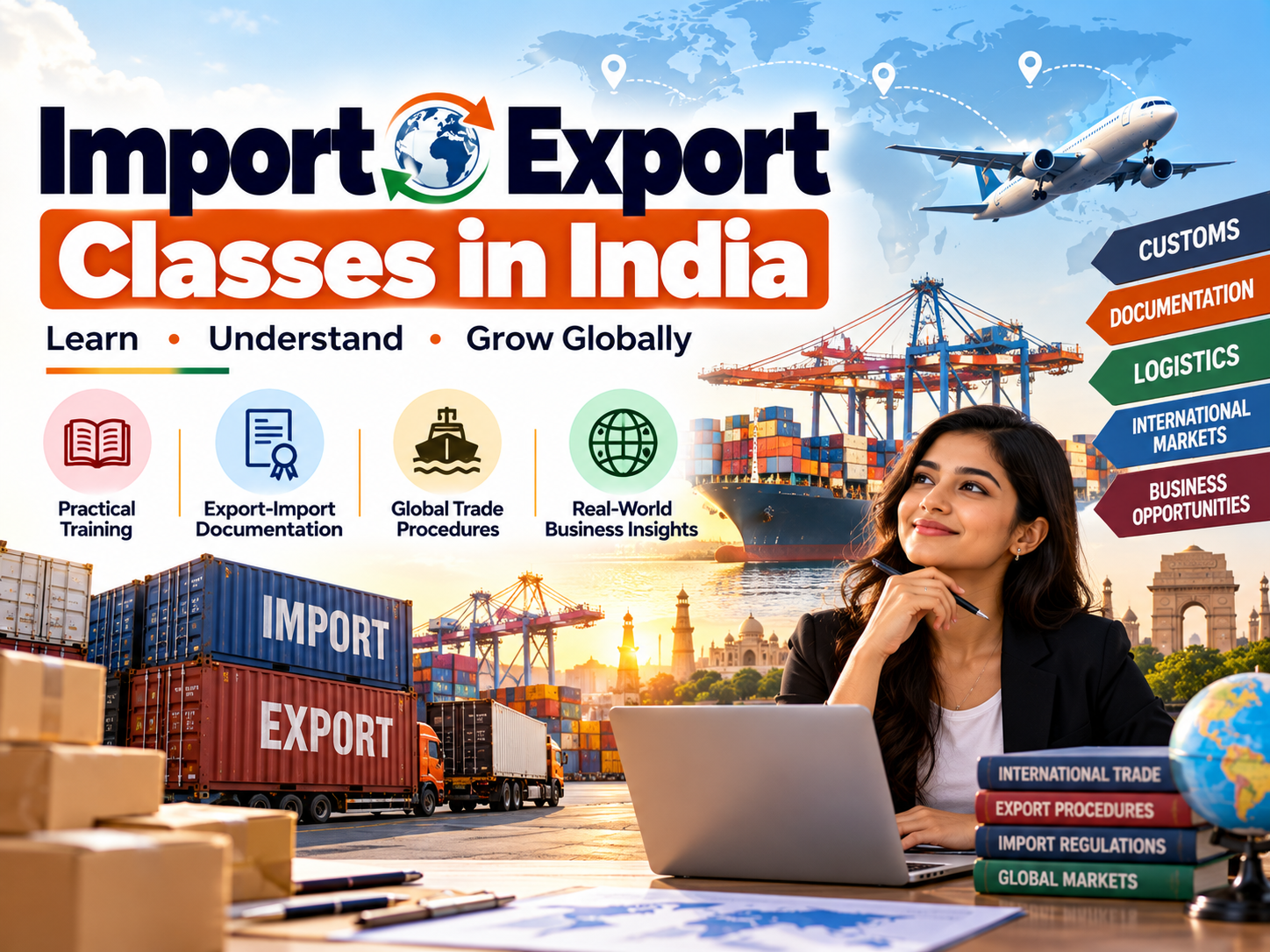
India’s global trade ecosystem is expanding rapidly, opening up lucrative opportunities for entrepreneurs, manufacturers, and professionals. However, navigating international markets requires deep domain knowledge–from customs compliance and HS codes to international banking, foreign buyer acquisition, and shipping logistics. Enrolling in top-tier import export classes in India provides the structured, practical foundation needed to build a profitable cross-border business.
Why Practical Import Export Training is Essential
Theoretical knowledge alone cannot shield an exporter from regulatory pitfalls or financial risks. Comprehensive export-import education equips you with actionable skills, including:
- Regulatory Documentation: Mastering GST, IEC (Import Export Code), RCMC, bill of lading, and certificate of origin procedures.
- Risk Management: Understanding Incoterms (CIF, FOB, EXW) and securing trade transactions through Letters of Credit (LC).
- Target Market Identification: Leveraging global trade data to determine demand patterns and high-yield product categories.
- Direct Buyer Sourcing: Executing verified verification methods to source international buyers and avoid trade fraud.
What to Look for in Import Export Classes in India
When selecting a training institute, prioritize hands-on experience and industry-aligned mentoring over generic classroom lectures. Leading institutes stand out through the following pillars:
1. Real-Time Case Studies and Practical Exposure
Quality programs emphasize practical trade scenarios, simulated customs clearances, and port visits rather than rote memorization. Explore our specialized export import courses to see how hands-on training bridges the gap between learning and operational execution.
2. Genuine Buyer Finding Strategies
The single biggest hurdle for new exporters is securing legitimate international buyers. Effective classes train you in B2B platform optimization, trade delegation outreach, embassy resources, and international digital marketing strategies.
3. Post-Training Mentorship
International trade involves unexpected challenges during live consignments. Having access to lifetime faculty support and trade advisory ensures your shipments clear without costly delays.
Step-by-Step Pathway to Starting Your Export Business
- Select Your Export Product: Analyze foreign trade trends and local manufacturing strengths. Browse our trade blog resources for market demand insights.
- Register Your Business: Obtain GST, IEC, and register with the relevant Export Promotion Council (EPC).
- Set Up Digital Footprint: Establish a professional export website, company profile, and localized digital assets.
- Secure International Buyers: Utilize verified sourcing strategies and outreach channels.
- Execute the Shipment: Finalize buyer contracts, secure payment terms, arrange freight forwarding, and complete customs formalities.
Enrolling in proven import export classes in India gives you the confidence, network, and operational blueprint to export globally with minimal risk.