



 Admin
Admin 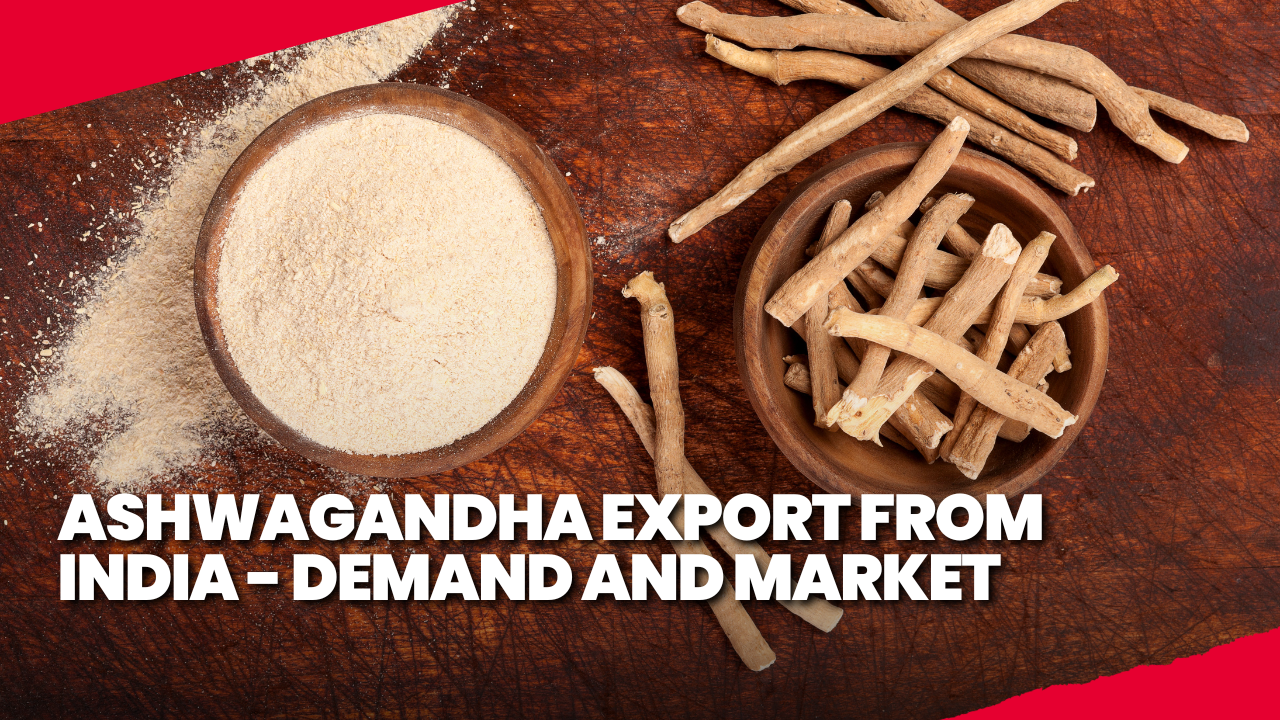
Ashwagandha has shifted from a traditional Ayurvedic herb to a widely traded international commodity. Its presence in the wellness, nutraceutical, and herbal supplement industries has expanded significantly in recent years, largely driven by growing awareness of ashwagandha benefits. For businesses exploring export opportunities, understanding what ashwagandha is, its commercial forms, such as ashwagandha powder and ashwagandha supplements, and the export structure from India is essential.
India remains the leading producer and exporter of ashwagandha, supplying both raw and processed forms to international markets.
What is Ashwagandha?
Ashwagandha, scientifically known as Withania somnifera, is a medicinal herb widely used in Ayurveda. The root is the primary component used in commercial applications and is processed into powder, extracts, and supplements.
Why India Leads in Ashwagandha Export
India’s leadership in ashwagandha export is supported by several structural advantages. The country has suitable climatic conditions for cultivation, especially in regions like Madhya Pradesh, Rajasthan, and Uttar Pradesh.
There is also a strong foundation of Ayurvedic knowledge, which enhances credibility in international markets. Cost efficiency in farming and processing allows Indian exporters to remain competitive.
In addition, the availability of certified processing units ensures that products meet global quality standards. These facilities handle drying, grinding, extraction, and packaging, making the supply chain more organized.
Ashwagandha Benefits with Market Demand
The commercial success of ashwagandha is closely linked to its functional benefits, which are widely recognized in global wellness markets.
- Supports stress reduction and mental balance
- Helps improve sleep quality
- Enhances stamina and physical performance
- Contributes to immune system support
- Used in fitness and recovery formulations
These benefits have made ashwagandha supplements a consistent performer in nutraceutical product lines, especially in developed markets.
Key Export Markets for Ashwagandha
United States: Largest importer, driven by strong consumer awareness of herbal products. High demand for ashwagandha supplements is focused on stress management and overall wellness.
Europe (Germany and the United Kingdom): Imports primarily standardized extracts for nutraceutical manufacturing. These markets emphasize strict quality standards and regulatory compliance.
Middle East: Growing demand for both ashwagandha powder and finished supplements, supported by increasing interest in natural health products.
Asia-Pacific (Australia and Japan): Expanding market with gradual growth in imports, driven by rising awareness of herbal and plant-based supplements.
Forms of Ashwagandha Exported From India
- Ashwagandha powder – Widely used in herbal blends and bulk export
- Ashwagandha extract – Concentrated form with higher export value
- Ashwagandha supplements – Capsules, tablets, and retail-ready formats
- Raw roots – Exported for processing in importing countries
Ashwagandha Export Data and Market Trends in India
The export of ashwagandha from India continues to grow, supported by rising international demand. The data below outlines key trends and major importing markets.
| Parameter | Details (Recent Trends) |
| Major Export Product | Ashwagandha Powder & Extract |
| Top Importing Countries | USA, Canada, Germany, UAE |
| Growth Trend | Steady increase due to wellness demand |
| Export Category | Herbal & Medicinal Plants |
India continues to dominate this category due to its production capacity and established export ecosystem.
Export Process for Ashwagandha From India
Entering the export market requires a structured approach. The process begins with obtaining an Import Export Code (IEC) and GST registration.
Next comes product compliance. Exporters must ensure that their products meet the safety, labeling, and quality requirements of the destination country. This is especially important for ashwagandha supplements, which are subject to dietary regulations in many regions.
Documentation is a critical stage. Standard export documents include the commercial invoice, packing list, certificate of origin, and phytosanitary certificate. These ensure smooth customs clearance.
Packaging and labeling must align with international standards, particularly for retail-ready products. The final step involves selecting a logistics method based on cost, delivery timelines, and product sensitivity.
Quality Standards and Certifications
Consistency in quality directly impacts export success. Buyers expect standardized products with verified composition and safety. Key certifications that strengthen export credibility are as follows.
- FSSAI registration for domestic compliance
- GMP certification for manufacturing standards
- ISO certification for process quality
- Organic certification for premium markets
Different countries have different compliance frameworks, so exporters must align their processes accordingly.
Tips to Start an Ashwagandha Export Business
- Focus on consistent raw material quality.
- Select the right product format based on your market
- Build direct buyer relationships
- Obtain required certifications
- Track compliance updates in target countries
Wrapping It Up
Ashwagandha export from India continues to expand as global consumers shift toward herbal and natural health solutions. Products such as ashwagandha powder and ashwagandha supplements are widely accepted across multiple regions.
For exporters, success depends on maintaining quality standards, understanding international requirements, and selecting the right product strategy. With a structured approach, this segment offers stable, scalable opportunities in the herbal trade.
FAQs
Ashwagandha is used in wellness products for stress management, improved sleep, and overall health support.
Ashwagandha powder and extracts are widely exported, whereas supplements command higher retail prices.
Yes, due to consistent global demand and India’s production capacity, it offers strong business potential when managed with proper quality and compliance standards.