


 Admin
Admin 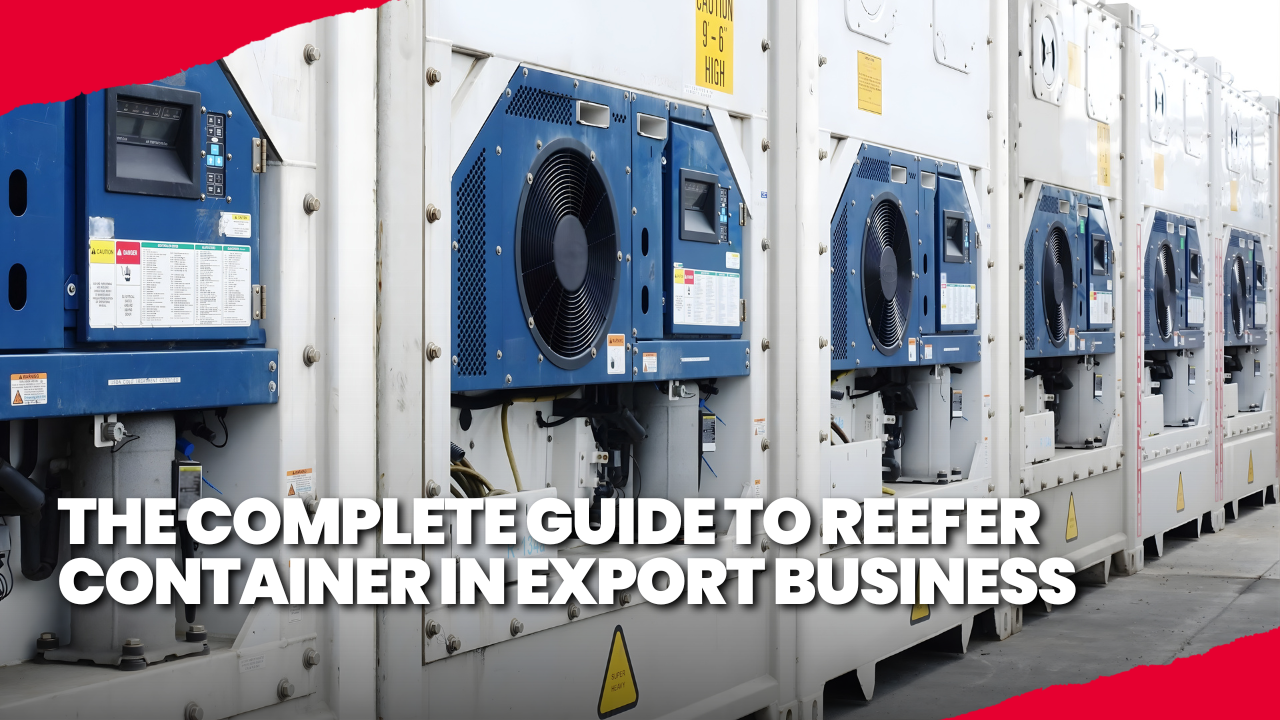
Moving perishable goods over long distances requires a lot more care than moving regular cargo. Products such as dairy, fruits, vegetables, medicines, seafood, and pharmaceuticals are susceptible to weather changes. This is where a reefer container is significant to global trade; it lets goods be moved safely and at the right temperature across sea, land, and rail networks.
Exporters, importers, and logistics workers who deal with temperature-sensitive cargo need to know how reefer containers work, the different reefer container types, and how they can be used.
What is Reefer Container?
A reefer container, short for “refrigerated container,” is a specialized shipping container designed to keep its contents at a fixed temperature during transport. Reefer containers differ from regular dry containers because they have a built-in cooling or heating system that actively maintains the cargo space temperature as needed.
A lot of the time, these containers are used for foreign shipping, where keeping the quality and safety of the goods is very important. They work like big mobile refrigerators.
How important reefer containers are to international trade
Reefer containers are highly significant to international trade because they make it safe to send fresh and temperature-sensitive goods over long distances. They help keep food fresh, extend its shelf life, and prevent spoilage, which saves money.
Additionally, reefer containers allow seasonal goods to be sold year-round and ensure that they meet all health and safety requirements. Without reefer containers, it would be tough to trade fresh food, medicines, and other temperature-controlled goods across foreign borders.
How Reefer Containers Do Their Work
Refrigeration units are built into reefer containers and are usually put at one end of the container. These units keep the cargo space cool. This system circulates cold air around the container so that everything stays at the same temperature.
The refrigeration machine is powered by electricity at ports and terminals, power systems on container ships, or diesel generators when it is being shipped by truck or train. This steady flow of air helps keep the temperature from changing in ways that could damage the goods.
Reefer container types
Different types of reefer containers are suitable for different types of cargo and weather conditions. There are mainlyfour reefer container types.
1. Integral Reefer Containers
These are the most common reefers, and they come with a refrigeration unit that operates independently. They allow you to regulate temperature and humidity accurately and can be used for a wide range of sensitive items.
2. Porthole Reefer Containers
Porthole reefers don’t have a cooling unit inside. Instead, they depend on externally supplied cold air introduced through openings. These aren’t used as much these days, and they’re usually used for cargo that doesn’t care as much about weather.
3. Insulated Containers
Insulated reefers are well-protected, but they might not have active refrigeration. They can be used for short-distance travel where keeping the temperature stable is enough.
4. Controlled Atmosphere, Dual-Temp Reefers
The amounts of oxygen, carbon dioxide, and humidity can be controlled in more advanced reefer containers. Some types also have more than one temperature zone, which allows different items to be shipped together under a range of conditions.
Also Read This: What Is EXW? A Complete Guide to EXW Incoterms
Standard Dimensions and Sizes for Reefer Containers
Reefer containers are made to meet international shipping standards and come in two main sizes.
20-Foot Reefer Container
This size is perfect for smaller shipments because it has enough room for
temperature-controlled goods while still letting air move well. It’s often used for unique or expensive things that go bad quickly.
40-Foot Reefer Container
A 40-foot reefer is often used to ship large amounts of goods. It can hold a lot more stuff inside and is suitable for transporting large quantities of vegetables, fruits, frozen foods, or medicines. The high-cube versions offer more height and space.
Standard Reefer Container Sizes
| Container Size | Typical Use Case | Temperature Range | Approx. Internal Capacity |
| 20-Foot Reefer | Small to mid-size perishable shipments | +25°C to −25°C | ~27–28 cubic meters |
| 40-Foot Reefer | Bulk and high-volume temperature-sensitive cargo | +25°C to −25°C | ~57–58 cubic meters |
| 40-Foot High Cube Reefer | Lightweight, high-volume perishables | +25°C to −25°C | ~60+ cubic meters |
Controls temperature
Reefer containers may sustain various temperatures depending onthe cargo.
- Conventional reefers function between +25°C and -25°C.
- Specialized deep-freeze units can reach -60°C.
Reefer containers reliably transport chilled, frozen, and ultra-cold products across great distances due to their flexibility.
What Reefer Containers Are Used For
There are many businesses that use reefer containers, such as
- Food and Agriculture
- and frozen foods
- Pharmaceuticals
- Floriculture
- Chemicals and Specialty Goods
Advantages and Challenges of Reefer Containers
Advantages
- Maintains product quality and safety
- Enables international distribution of perishables
- Supports precise temperature control
- Reduces spoilage and wastage
Challenges
- Higher operational costs compared to dry containers
- Dependence on a continuous power supply
- Requires careful planning and monitoring
How to Use Reefer Containers Most Effectively
To make sure reefer packages go smoothly, it’s important to handle and plan them correctly. Before loading, the cargo should be pre-cooled so that the reefer container can keep the right temperature. Picking the right type and size of reefer container for the goods inside helps keep the air moving and the temperature stable.
During transport, the temperature should be checked on a regular basis to avoid sudden changes. Power must be provided consistently at all stages of transportation, including ports, vessels, and across the ocean.
Airflow and filling rules should also be followed correctly so that cold air can move through evenly inside the container. These steps help keep the quality of the goods safe and reduce the risk that they will be damaged or go bad.
Wrapping It Up
Modern international logistics would be incomplete without reefer containers. By keeping the temperature stable, they enable the safe movement of perishable and temperature-sensitive goods along foreign supply chains.
Businesses can protect their product quality, reduce losses, and confidently enter international markets if they know the different types of reefer cases, their sizes, the temperatures they can hold, and the best ways to use them.
FAQs
A reefer container is a tooling shipping container used to transport temperature-sensitive items in a controlled environment.
Integral reefers, porthole reefers, insulated containers, and advanced controlled-atmosphere reefers are some of the most common types.
Reefer containers are available in 20-foot and 40-foot sizes, but you can also get high-cube containers for more space.
Also Checkout Our YouTube Channel: @limeinstituteofexportimport