


 Admin
Admin 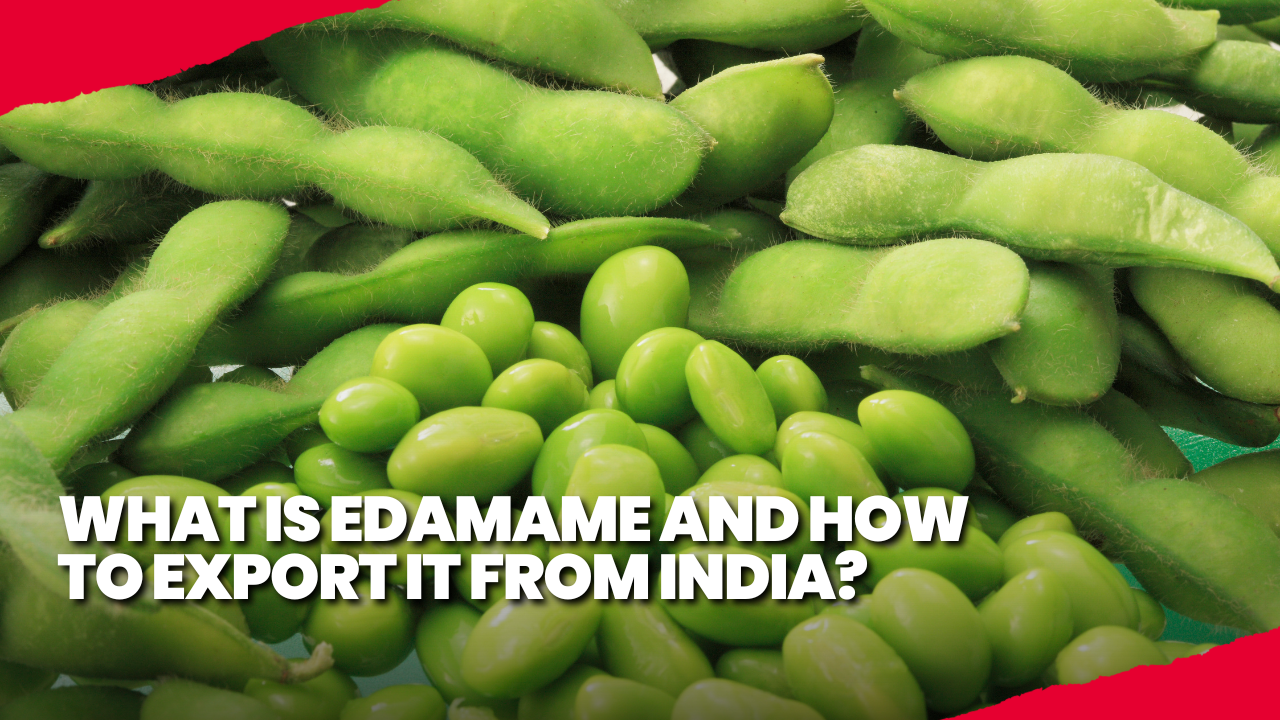
What if we told you that India can grow, process, and transport one of the fastest-growing health foods internationally, yet it’s not widely used? That food is Edamame, and before going deeper, many still ask what is edamame, especially in the Indian market.
In just five years, edamame has gone from being a unique Japanese starter to a popular superfood snack everywhere. From Dubai to New York, you can now find it in gyms, vegan businesses, high-end grocery stores, and meal-prep brands.
Why? As customer trends toward plant-based protein, low-calorie snacks, and clean-label foods, edamame meets all three needs.
Recent market estimates say that the international edamame market will touch USD 2.4 billion in 2024. It is expected to hit nearly USD 6 billion by 2033, growing at a CAGR of over 10%. The most popular types of food in stores are frozen and ready-to-eat, so demand is growing fastest in the USA, EU, Middle East, and Southeast Asia.
An intriguing aspect of the situation is that India holds the climate, land for agriculture, soybean cultivation proficiency, and a developing cold-chain infrastructure necessary for supply; however, edamame export from India is still significantly underserved.
Even though China, Thailand, and Indonesia supply most of the food, buyers are actively seeking variety, residue-free crops, and non-GMO alternatives. This gives India a timely advantage.
Where Does India Stand Today?
Soy exports from India are well-established. They exported 3.5 million metric tonnes of soybeans and 21 lakh tonnes of soybean meal in 2023–24, up 16% from the previous year. Because they know how to harvest, prepare, and ship edamame, they should make better products.
Edamame sales are growing despite their novelty. Even though many people still search what is edamame, the demand continues to increase internationally. Edamame sales are growing despite their novelty, and this is helping create opportunities for edamame export from India.
Some enterprises that import the correct seed kinds and use contract farming send frozen edamame to high-value markets. Rising domestic demand, notably in Mumbai, Delhi, and Bengaluru, where Japanese food trends are expanding, helps supply chain growth. India could dominate the global edamame market. It has perfect temperatures, skilled personnel, and extra cold storage.
HS Codes and Classification for Edamame
Customs clearance, incentives, and GST mapping require correct HS codes. Exporters can use edamame HS codes and trade records from the Indian import–export database Seair to classify their product as fresh frozen, shelled in pod, prepared, etc.
Edamame is classified internationally as –
- HSN 0710: Frozen vegetables (some frozen soybeans/edamame)
- Prepared or preserved veggies (used in seasoning or processing)
For Indian exporters, consider-
- Consult a customs broker or Seair to verify the HS code.
- Keep HS codes constant throughout invoices, packing lists, shipping bills, and GST returns.
- Check for export incentives or limitations on that code.
Also Read This: Know Everything about the Largest Producer of Tea in the World
How to Start Edamame Export from India – Practical Steps
1. Market Research.
Find out where demand is highest. Find target market importers, wholesalers, food service companies, and retail chains. Research popular formats include frozen pods, shelled edamame, and ready-to-eat packets. Study packaging size, branding, and pricing to identify market expectations and profit potential.
2. Partner with farmers or a contract farm.
Make sure your supply chain is reliable. Select agricultural regions with a good climate and irrigation. Contract farm with farmers to harvest edamame at the right time and with the right seeds. Provide guidance, seeds, and agronomy support to maintain quality, maturity, and pesticide control.
3. Use a processing and freezing unit.
After harvest, edamame must be processed rapidly to preserve color, texture, and nutrition. Build your own facility or work with a frozen food processor with blanching, sorting, IQF, and cold-store capabilities. Check the unit’s hygiene and export compliance.
4. Sort HS Codes, Licenses, and Documents.
Plan the product and supply chain, then align regulations. Check the HS code for fresh, frozen, or processed edamame using customs resources or Seair. Make sure you have IEC export licenses, FSSAI food processing permission, and any country-specific compliance papers.
5. Get certified, build a quality story.
International markets value quality and reliability. Apply GAP at the farm level and obtain HACCP, ISO 22000, or BRC processing certifications. To attract premium buyers, emphasize non-GMO, residue-controlled cultivation, organic certification, and sustainability.
6. Begin with trial shipments.
Start small with sample shipments before scaling. This lets buyers rate taste, packaging, texture, and shelf stability. Improve frozen quality, branding, and processing methods with the insights. When the product satisfies expectations, export confidently.
Why Do Edamame Exports Focus on Certain Countries?
Primary edamame consumption and import centers internationally are-
United States and Canada – Big demand for frozen and snack edamame
Europe – Especially countries with strong vegan and fitness markets
Middle East – Growing demand in premium HORECA (Hotels, Restaurants, Catering)
China, Indonesia, and Thailand traditionally export the most edamame and related HS codes. China ships almost 60% of specific edamame categories, according to one trade database.
This means joining a competitive but developing market in India where quality, consistency, and specialized positioning (e.g., organic, non-GMO, residue-controlled) can help you stand out.
Wrapping It Up on Edamame Export from India
Edamame may look like a simple green bean, but it’s part of a global market worth billions of dollars that’s growing because of trends in health, fitness, and plant-based food. India already develops strong cold-chain facilities and grows a lot of beans.
If farmers work together, use the right seeds, and follow international rules, edamame export from India can go from being a niche market to an actual possibility with a lot of value added.
To move up the value chain from bulk soy to a premium, branded, and widely in-demand product, edamame is an excellent choice for exporters, startups in agriculture, and farmer groups that want to grow more than just commodity crops.
FAQs
No. Edamame are immature green soybeans harvested early for human consumption, whereas regular soybeans are mature and mainly used for oil, meal, and feed.
If fresh, frozen, or processed. Exporters utilize 0710 or 2008 HS codes and use Seair and customs brokers to confirm the 8-digit code.
It can be if you handle quality, cold chain, and certifications efficiently and target premium markets. Moving from raw bulk to branded, value-added frozen packets boosts profits.
Also Checkout Our YouTube Channel: @limeinstituteofexportimport